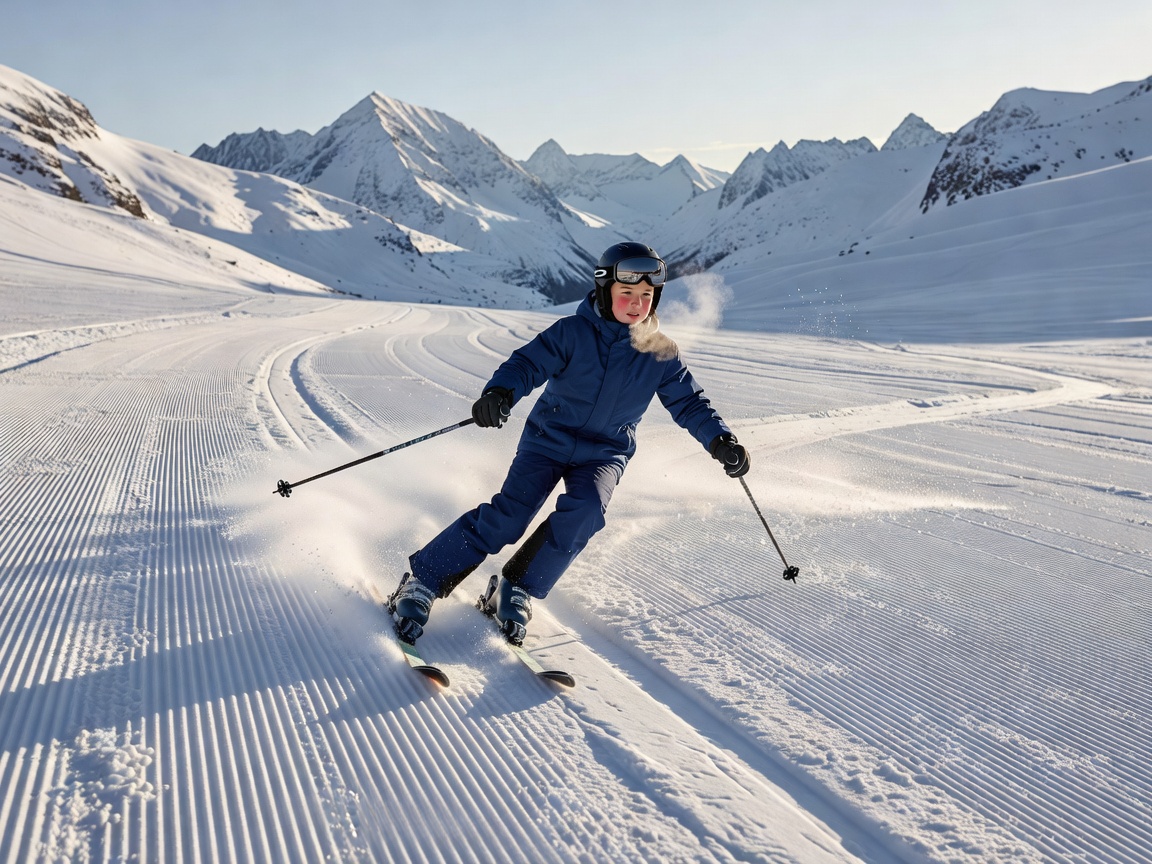
A useful starting point
Match the lesson to the skier, not the label.
Ski-school training works best when the starting point is clear. A short conversation about recent experience, comfort on different slopes and personal goals gives an instructor useful context. Ability labels can help with grouping, but they do not describe every skill. One skier may be comfortable moving across a slope yet unsure about stopping. Another may link turns on gentle terrain but need more control when speed or slope angle changes.
Share relevant details before the lesson begins. Mention time away from skiing, previous instruction, equipment concerns and any terrain that feels unfamiliar. Ask how the instructor will assess the group and how progress will be communicated. These practical exchanges help set expectations without assuming that every participant learns at the same pace.
Beginner and intermediate priorities
Beginners need a calm introduction to movement, balance and control. Early sessions commonly focus on standing, sliding, stopping and changing direction in an appropriate learning area. Repetition matters. A simple task performed with control is more useful than moving to steeper terrain before the skier is ready. The instructor can choose exercises and terrain according to the group and local conditions.
Intermediate skiers often need refinement rather than a list of new moves. Their priorities may include turn shape, speed management, consistent balance and adapting to a wider range of prepared terrain. A skier who can link turns on an easy slope may need time to build confidence when snow texture, pitch or traffic changes. Specific feedback helps identify one adjustment at a time.
These are broad categories, not rigid pathways. Training priorities should reflect ability, comfort, physical readiness and the terrain available that day. Ask the instructor what a successful session would look like for the participant, then agree on a sensible focus.
Structure, assessment and communication
A useful lesson usually begins with a check-in, a brief assessment and a clear session focus. The instructor may observe basic movement on suitable terrain, then choose a drill or task that addresses the group’s needs. Practice intervals should allow skiers to listen, try the task and receive feedback. Pauses are part of instruction; constant movement is not the only measure of a productive lesson.
Before the session, confirm the meeting point, start time, expected duration, group format and what happens if a participant arrives late. Ask how the instructor wants questions raised and whether the group will stay together. In a mixed-ability group, different comfort levels can limit how quickly the session advances. Small, clearly communicated adjustments can make the plan easier to follow.
Skill assessment should be ongoing. An instructor may change a task or remain on the same terrain if conditions, confidence or control call for it. Participants should speak up if instructions are unclear, equipment feels uncomfortable or the group pace is difficult to manage. Clear communication supports better decisions; it does not replace the instructor’s judgement or local mountain rules.
Balance, control and turning fundamentals
Balance and control are practical foundations. Skiers need to manage their position, regulate speed and make turns that suit their level and the space available. Training can use simple exercises that draw attention to movement, direction and rhythm. The exact task should be selected by a qualified instructor and adapted to the participant. Avoid treating a single drill as a shortcut or assuming that one technical cue applies to everyone.
Turning fundamentals develop over time. The focus may shift from basic direction changes to more deliberate turn shape and linked turns. Terrain selection should leave room for the group to practise without undue pressure from slope angle, traffic or poor visibility. A well-chosen easy run can offer more useful repetition than a challenging slope where the skier is focused mainly on coping.
Terrain, equipment and weather
Ask how the training environment will be chosen. Factors include the skier’s current control, snow surface, crowding, visibility and the available open terrain. Local signage and closures take priority. If conditions change, an instructor may adjust the route, pause the session or move to another suitable area. Participants should follow those directions and the mountain’s rules.
Equipment fit matters because discomfort can distract from learning. Boots should be checked for fit and function by a suitably qualified boot fitter when needed. Skis, bindings, helmet and other protective equipment should be appropriate for the participant and used according to manufacturer instructions. Do not make unqualified binding adjustments or ignore an equipment concern during a lesson.
Weather can affect visibility, temperature, wind and the usable training area. Check current local information before setting out, dress for the forecast and carry what the instructor or local guidance recommends. A lesson plan should be flexible enough to respond to changing conditions. Poor visibility or severe weather may require a different activity or cancellation under local procedures.
At the end of a session, ask for one or two observations and a manageable next focus. Note what terrain and tasks felt appropriate, what needs clarification and any equipment issue to resolve. Progression is easier to plan when the next step is specific. The aim is not to force advancement on a schedule; it is to build understanding, control and confidence at a pace suited to the skier.
Confirm lesson details directly with the provider you select. Availability, group arrangements, instruction scope and local rules vary.